What Happens to Your Chest When You Remove Implants? (And Will You Need a Lift?)
Some people shrink up really well, so it's never wrong to just remove and see what happens.
What Happens to the Tissue of Your Chest When You Remove Implants? (And Will You Need a Lift?)
A really thoughtful question came in from a follower considering explant: "What's actually going to happen to my tissue when the implant comes out? Will the skin shrink up enough that I don't need a lift?"
The honest answer is "it depends," but there are very specific anatomic clues we look at to make an educated guess. Let me walk through what implants do to your tissue, what comes back when they're removed, and how I figure out whether a patient is going to need a breast lift after explant or not.
What Implants Do to Your Tissue Over Time
Implants change your chest in a few characteristic ways:
1. They Stretch and Thin Your Tissue
The implant stretches the tissue covering it: skin, breast tissue, and any other layers in between. The thinning is most pronounced directly over the implant and gets progressively less as you move out toward the edges.
So in the middle of your chest, the tissue gets the most stretched and thinned. As you move out toward the sides, the stretching and thinning gets less and less.
2. They Push Tissue to the Side
The implant takes up space, so anything that was sitting in the central chest gets pushed laterally to make room. Your own breast tissue gets displaced outward.
3. The Effect Is Bigger With Bigger and Higher-Profile Implants
- Larger implants stretch more
- Higher-profile implants (the ones that "stick out more") concentrate the stretch in the central chest, making more dramatic central thinning
- Smaller, lower-profile implants distribute the stretch more gently
So What Does the Chest Look Like Right After Explant?
Immediately after implant removal, the appearance can be surprising for patients who haven't been prepared for it:
- Everything looks wider and flatter than before surgery
- The central chest can look sunken in, especially if the implants were large and high-profile relative to the patient's native tissue
- Tissue that was pushed to the sides hasn't come back yet
This is the acute appearance, not the final result. Over weeks to months, the tissue redistributes, the skin contracts, and things settle. But that initial post-op look can be jarring.
Will the Skin Shrink Back? The Anatomic Clues I Look At
This is where the "will I need a lift" question gets answered. There are specific things I evaluate at consultation that tell me how likely the chest is to shrink back into a reasonable shape on its own.
Clue 1: Where Is the Nipple Actually Sitting?
This is the first thing I look at. I check:
- Mid-humerus position: does your nipple sit roughly at the middle of your upper arm bone?
- Sternal notch to nipple distance: is it about 18-20 cm from the dip at the top of your sternum to your nipple?
If your nipple is in roughly the right place anatomically, you have a better chance of everything shrinking up. The skin and breast tissue have a good chance of contracting back into a normal shape because the structural landmarks are still where they should be.
Clue 2: How Big Are Your Implants?
- Smaller implants = better chance of shrink-back
- Larger implants = more permanent stretch, less shrink-back potential
If you have smaller implants and your tissue is in the right place, you have a better chance of everything shrinking up without a lift.
Clue 3: Has the Implant Bottomed Out?
This is another group of patients who actually do really well with implant removal:
If your tissue is in the right place, but your implant has bottomed out (the implant has fallen below where it should be while your nipple is still anatomically correct), you often do really well with implant removal and minimal further changes.
These are patients where:
- The breast is still where it should be
- The nipple is in a reasonable position
- The implant is the only thing sitting too low
When you remove the implant, the abdominal skin (which was being stretched downward by the bottomed-out implant) usually shrinks up really nicely, and the breast is already about where it's supposed to be.
Clue 4: Is the Implant Sitting Too High?
This is the trickiest scenario, and it's one I want patients to specifically understand because it can be misread.
Sometimes a patient looks at her chest and thinks her nipple is sitting too low, but actually, the nipple isn't low. The implant is high.
Causes of an unusually high implant:
- The implant is under the muscle and never dropped properly (implant didn't settle)
- A capsular contracture is holding the implant up
When the implant is sitting high, your nipple sits on the lower curve of the implant when you look down, making it appear that the nipple is low. But measure carefully, and the nipple may not really be low.
For these patients, you may be fine after explant without a lift, other than being a bit hollow up top. Some upper-pole fat grafting may help.
When You'll Likely Need a Lift
If your nipple is genuinely sitting low (below the inframammary fold, pointing south, well below mid-humerus position), a lift is probably part of your future.
The mechanism is straightforward:
- The implant has stretched everything down
- The nipple has dropped along with the breast tissue
- Removing the implant doesn't magically put the nipple back where it belongs
- Some people shrink up really well, but in general these patients can consider a lift
For these patients, a breast lift is worth considering, either at the time of explant or staged afterward.
"Just Take Them Out and See What Happens": Is That Reasonable?
This is a legitimate strategy for some patients:
- The simplest, cleanest surgery
- The most conservative choice
- Reversible: if you don't love how it heals, you can stage a lift later or replace the implants
- Lets your tissue tell you what it's going to do
The downside is that you may end up needing a second surgery if the tissue doesn't come back as well as we hoped.
For patients who are borderline on needing a lift, I sometimes recommend staged: remove now, see how it heals, then decide on a lift if needed.
For patients who are clearly going to need a lift, doing it at the same operation saves a surgery, and results are typically similar either way. If the capsules need to come out or there isn't much breast tissue, staging is often better.
My Honest Recommendation Framework
Here's how I think about this with patients:
| Patient Profile | Likely Recommendation |
|---|---|
| Small implants, nipple in good position | Explant alone, likely no lift needed |
| Larger implants, nipple in good position | Explant + watch healing, possibly stage a lift later |
| Bottomed-out implant, native tissue in place | Explant alone, may need minor revisions |
| Implant sitting too high, nipple "looks" low | Explant, possibly with upper-pole fat grafting; may not need a lift |
| Genuinely low nipple, Grade 2-3 ptosis | Explant with a lift, at the same operation or staged |
This framework is individualized. Your surgeon should be looking at your specific anatomy and walking you through what they see, not giving you a generic answer.
What to Ask at Your Consultation
When you're consulting about explant, specific questions to bring up:
- "Where is my nipple sitting relative to the ideal position?"
- "What ptosis grade am I, with the implants in place?"
- "How much of what looks like droop is actually from the implant being out of position?"
- "What's your best guess as to whether I'll need a lift?"
- "If we explant first and see how it heals, when can we make the lift decision?"
A thoughtful surgeon will engage with all of these and not just give you a one-size answer.
The Bottom Line
When you remove breast implants, your chest initially looks wider, flatter, and sometimes sunken in the middle, especially with larger or higher-profile implants. Over weeks to months, things settle and the tissue redistributes.
Whether you'll need a lift afterward depends on:
- Where your nipple is actually sitting (the first thing I look at)
- How big your implants are
- Whether the implant has bottomed out (good news scenario) or is sitting too high (often also good news)
- Your skin quality at baseline
If you're unsure, explanting first and watching how things heal is a legitimate strategy. If your nipple is clearly sitting too low, you'll probably need a lift, at the same operation or later.
This is genuinely a place where anatomy drives the decision, and your surgeon should be able to walk you through exactly what they see and what they predict.
Your Journey to Renewed Confidence

Transform Your Life
Every person deserves to feel comfortable and confident in their own body. Our procedures aren't just about physical change. They're about reclaiming your life, your comfort, and your self-assurance.
Dr. Killeen and her team support you every step of the way, from your first consultation through recovery.
Take the first step toward the life you deserve.
Schedule Your ConsultationTransform Your Life
Every person deserves to feel comfortable and confident in their own body. Our procedures aren't just about physical change. They're about reclaiming your life, your comfort, and your self-assurance.
Dr. Killeen and her team support you every step of the way, from your first consultation through recovery.
Take the first step toward the life you deserve.
Schedule Your ConsultationRelated Articles
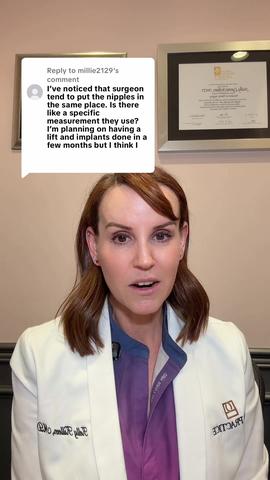
How Surgeons Decide Where to Put the Nipple in a Breast Lift or Reduction
October 22, 2025
Dr. Killeen breaks down the three main tools surgeons use to decide NAC placement in a breast lift or reduction — sternal notch measurements, the mid-humerus landmark, and Pitanguy's point — plus why placing the nipple too high is far more problematic than placing it too low.

"My Compression Garment Was Sitting Too High and Pushed My Breasts Up — Did I Ruin My Result?"
June 2, 2026
Dr. Killeen reassures post-op patients who accidentally wore their compression garment too high and pushed their breasts up out of position. Including a real-world example of a patient whose implants were sitting at her collarbones from a too-small bra — and how everything settled back without surgery.
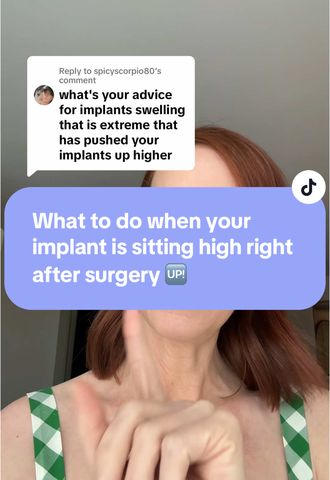
What to Do If Your Breast Implants Are Sitting Too High After Surgery
April 28, 2025
Dr. Killeen explains why breast implants often sit too high in the early weeks after augmentation and what to do. The most common causes are a tight or spasming muscle (under the muscle) or tight tissue that has not stretched yet, both usually fixed by tincture of time and sometimes a strap. She covers why massage probably is not doing much, why it is likely not swelling, and the one red flag — an implant that stays high or keeps rising at four to six weeks, which can signal an early capsular contracture.