What Is an Internal Bra? (And Why I Use Surgical Scaffolding)
An internal bra adds a little extra support to whatever we have done to your breast, a lift, a reduction, or an implant, to hold things up just like your bra does. My favorite way to create one is with a surgical scaffold like TIGR Matrix or GalaFLEX. They dissolve and leave thicker collagen behind. Just know these are used off-label in the breast, so discuss the risks, benefits, and alternatives with your surgeon.
What Is an Internal Bra? (And Why I Use Surgical Scaffolding)
Let's talk about internal bras, because the term gets used a lot and it means more than people realize. An internal bra is a way a plastic surgeon adds a little extra support to whatever we've done to your breast, whether that's a breast lift, a breast reduction, or a breast implant. The goal is simple: to hold things up, exactly the way your regular bra does, but from the inside.
There Are a Million Ways to Make One
As with just about everything in plastic surgery, there's no single way to create an internal bra. Surgeons build them out of all kinds of things:
- A series of stitches (suture techniques)
- The muscle fascia (the strong lining over the muscle)
- The skin itself
- Tucking the breast under the muscle
All of these are legitimate ways to add internal support, and different surgeons favor different approaches based on training and the specific problem they're solving.
My Favorite: Surgical Scaffolding
The approach that's really taken over in the last couple of years, and my personal favorite, is the use of a surgical scaffold. Instead of relying on your own tissue or stitches alone, we use a dedicated product to better support the breast. (If you want the deeper primer on these materials, I've written about what scaffolding actually is separately.)
There are a variety of scaffolds we use in the body, but my two favorites are:
- TIGR Matrix (sometimes called TIGR mesh)
- GalaFLEX
What I like about both: they dissolve over time, and as they dissolve, they leave behind a little thicker collagen. That collagen becomes part of your own long-term support structure, which is a big part of why the type of scaffold changes how much a reconstruction or lift settles.
There are plenty of others out there, and every surgeon has their preferences, some love dermal matrix, some love mesh. Your surgeon will tell you which ones they favor and why.
The Important Part: These Are Off-Label
Here's something I want every patient to understand clearly, because it matters and it's often glossed over: all of these scaffolding products are used off-label in the breast.
What does "off-label" mean? It means the product is FDA approved, but for a different specific reason than internal-bra use in the breast:
- Most of them carry an indication for soft tissue support, generally
- But not specifically for use in the breast
So when we use them as an internal bra, we're using an FDA-approved product outside its exact labeled indication. That's common and accepted in medicine, but it is absolutely something you should discuss with your surgeon so you understand it going in.
My Honest Take
So where do I land? Yes, I think internal bras with scaffolding are beneficial, which is why I recommend them to my patients. In my hands:
- I think they're safe
- I have very few problems with them
But, and this is the part I never skip, anytime you're placing a product or object in the body, you need a good conversation with your surgeon about the risks, benefits, and alternatives. That's how you make a genuinely informed decision for your own body, including understanding the off-label nature of these materials.
The Bottom Line
An internal bra is added support a surgeon builds into a breast lift, reduction, or augmentation to hold things up like a bra does. It can be made from stitches, fascia, skin, muscle positioning, or, my preference, a surgical scaffold.
My favorite scaffolds are TIGR Matrix and GalaFLEX, both dissolve and leave supportive collagen behind. They're beneficial and safe in my experience, but they're used off-label in the breast, so have that honest risks-benefits-alternatives conversation with your surgeon before deciding. Done thoughtfully, an internal bra can add real, lasting support to your result.
Your Journey to Renewed Confidence

Transform Your Life
Every person deserves to feel comfortable and confident in their own body. Our procedures aren't just about physical change. They're about reclaiming your life, your comfort, and your self-assurance.
Dr. Killeen and her team support you every step of the way, from your first consultation through recovery.
Take the first step toward the life you deserve.
Schedule Your ConsultationTransform Your Life
Every person deserves to feel comfortable and confident in their own body. Our procedures aren't just about physical change. They're about reclaiming your life, your comfort, and your self-assurance.
Dr. Killeen and her team support you every step of the way, from your first consultation through recovery.
Take the first step toward the life you deserve.
Schedule Your ConsultationRelated Articles
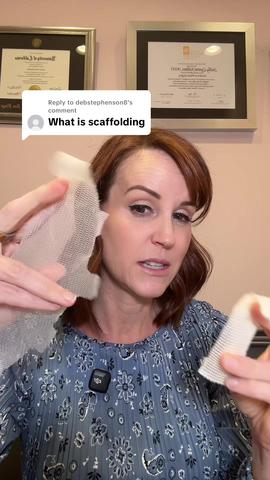
What Is "Scaffolding" in Breast Surgery? Dermal Matrix, Mesh, and What They Actually Do
August 21, 2025
Dr. Killeen explains what surgeons mean by "scaffolding" in breast surgery — including dermal matrix products like AlloDerm and Strattice, dissolvable meshes like TIGR and Galaflex, and why this is fundamentally different from the vaginal mesh products you've seen in scary commercials.

Mesh in a First-Time Breast Augmentation: Who Should Consider It
February 21, 2025
Dr. Killeen explains when she considers surgical mesh (a dissolvable scaffold) in a primary breast augmentation: patients whose crease is being moved (tuberous breasts, trans augmentations), massive weight loss patients, very large implants, high-impact athletes, and Motiva patients because of the thinner capsule. She is clear that most patients do not need it, that it is off-label, and that she prefers GalaFLEX.
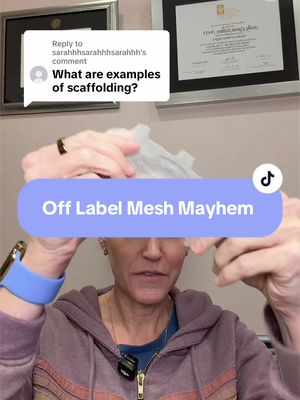
Breast Surgery Scaffolds, Ranked: My Favorites, My Least Favorites, and Why
July 13, 2026
Dr. Killeen gives a candid, product-by-product guide to the scaffolds used in breast surgery — acellular dermal matrix (AlloDerm, FlexHD, Cortiva), the pig version Strattice she dislikes, the off-market disaster SERI Scaffold, and the dissolvable meshes GalaFLEX (her favorite, for its anti-inflammatory and anti-microbial peptides that reduce seromas and help with contracture), TIGR Matrix (close second), plus DuraSorb and OviTex, which she likes least. She also explains how she decides whether to use one at all. Note: all are off-label in the breast.