True Gynecomastia vs. Pseudogynecomastia: Which Surgery Do You Need?
I don't want you to have to have two surgeries if I know it's going to be two surgeries. I'd rather just get it done in one.
True Gynecomastia vs. Pseudogynecomastia: Which Surgery Do You Need?
A question came in that the person worried was a dumb one. It's not a dumb question at all. It's actually a fantastic question:
"Say you have gynecomastia and you're going to a plastic surgeon for an evaluation. How do you know what surgery needs to be done, and how do you advocate for yourself to make sure the right surgery is done?"
Here's how I evaluate it, and what to ask at your consultation.
First Question: Is It True Gynecomastia or Pseudogynecomastia?
Whenever I evaluate a patient with gynecomastia, the first thing I consider is what's actually making the area enlarged.
True Gynecomastia: Gland
With true gynecomastia, there's actual hypertrophy, or enlargement, of the glandular tissue.
When I examine a patient, I feel a firm little nodule of tissue under the areola. It can be very small, like the size of an almond, or it can be very large. I've seen it up to the size of a tennis ball.
And depending on the overall size and shape of your chest, even a very small area of hypertrophy can be very noticeable.
Pseudogynecomastia: Fat
With pseudogynecomastia, it's usually a fatty tissue issue. The fatty tissue in the area is hypertrophied, more than it should be.
On exam, fatty tissue is very soft. You won't have that firm nodule of tissue underneath the areola.
The treatment for these two things is very different, so this distinction drives everything else. (For teenagers, the approach is different again. Here's why we usually wait on gynecomastia in adolescent boys.)
Treating True Gynecomastia: The Gland Has to Come Out
Glandular tissue is firm, so it's not something you can really remove well with liposuction. If you have an area of glandular hypertrophy, there are two ways to remove it:
- Surgical excision. We make a small incision and cut the area out.
- A minimally invasive option. A small probe goes in through a tiny incision, and under ultrasound guidance, its little rotating "chomper" chomps up the area of hypertrophy and removes it.
Treating Pseudogynecomastia: Liposuction
Since pseudogynecomastia is fatty tissue, you treat it the way we always treat fatty tissue: with liposuction, not direct excision. The goal is to make a little incision and liposuction that extra fatty tissue out.
The fatty tissue in the chest tends to be more fibrous than fat elsewhere. So my personal preference is ultrasound-assisted liposuction. I like the brand VASER, and I think it's the better option for that area. (More on the different liposuction options here.)
Most Patients Do Best With Both
Even with true gynecomastia, where you're removing glandular tissue, most patients get a better cosmetic result if you also do some liposuction to smooth the area and get the contour right.
Even if a patient doesn't have a lot of extra fat, smoothing the area for contour is really helpful.
Then There's the Skin
The last thing to consider if you're having gynecomastia surgery is what your skin looks like.
Some people have very tight, good-quality skin, and it shrinks up really nicely with whatever we do, liposuction or excision. Other people start out with looser or lower-quality skin, and the skin is going to hang. (Skin quality is the same deciding factor in liposuction vs. a tummy tuck.)
So it's important to talk with your doctor about your options for skin tightening.
Why I Usually Wait and See
Surgical skin tightening on a man's chest leaves scars that can be pathognomonic, meaning they basically tell people what you had done.
So for most patients, we like to wait and see what the skin does, just like we do with other procedures, such as liposuction or implant removal. In a lot of patients, the skin shrinks up enough that no surgical skin tightening is needed.
Non-Invasive Skin Tightening
The other option is non-invasive skin tightening, which can be really useful in a lot of patients, especially if you do the recommended number of treatments and keep up with it.
In the right circumstances, you can get 20 to 30% tightening, and that can really make the area look good. How well it works depends on how loose your skin is and how well you respond to the treatments.
How to Advocate for Yourself at the Consultation
If you have an experienced surgeon, you really shouldn't have to ask them to take out the gland. They should do that.
Some surgeons always start with liposuction to see if they can make the area look better, and only go back for the gland if it's needed. That's not necessarily wrong. But most of us who do a lot of this type of surgery can tell when we examine you whether the gland needs to come out at the same time.
I don't want you to have to have two surgeries if I know it's going to be two surgeries. I'd rather just get it done in one.
So at your consultation, ask your surgeon:
- What do you think the problem is?
- Do I have true gynecomastia, or pseudogynecomastia?
- If it's true gynecomastia, what's your plan to remove the gland?
(Here are a few more tips for getting the most out of a consultation.)
The Bottom Line
- True gynecomastia is gland: a firm nodule under the areola, anywhere from almond-sized to tennis-ball-sized. It has to be cut out, through a small incision or with a minimally invasive probe under ultrasound
- Pseudogynecomastia is fat: soft on exam, and treated with liposuction. I prefer ultrasound-assisted liposuction (VASER) because chest fat is fibrous
- Most patients do best with both, because liposuction smooths the contour even when the gland is the main problem
- Loose skin: usually wait and see first, because surgical tightening scars on a man's chest are telling. Non-invasive tightening can get 20 to 30% in the right patient
- At your consult, ask what the problem is, whether it's true or pseudogynecomastia, and what the plan is for the gland. An experienced surgeon should plan for one surgery, not two
Your Journey to Renewed Confidence

Transform Your Life
Every person deserves to feel comfortable and confident in their own body. Our procedures aren't just about physical change. They're about reclaiming your life, your comfort, and your self-assurance.
Dr. Killeen and her team support you every step of the way, from your first consultation through recovery.
Take the first step toward the life you deserve.
Schedule Your ConsultationTransform Your Life
Every person deserves to feel comfortable and confident in their own body. Our procedures aren't just about physical change. They're about reclaiming your life, your comfort, and your self-assurance.
Dr. Killeen and her team support you every step of the way, from your first consultation through recovery.
Take the first step toward the life you deserve.
Schedule Your ConsultationRelated Articles

Gynecomastia in Adolescent Boys: Why We Usually Wait Before Operating
May 29, 2025
Dr. Killeen explains how gynecomastia (excess breast tissue) is approached in adolescent boys — why surgery is rarely needed because it almost always resolves on its own, the role of medications and marijuana, and how to distinguish true gynecomastia from pseudogynecomastia (fatty tissue from obesity).
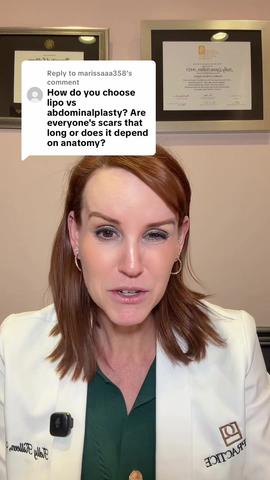
Liposuction vs. Tummy Tuck — and Why Some Scars Are Longer Than Others
November 11, 2025
Dr. Killeen walks through how to choose between liposuction and a tummy tuck based on your anatomy, why some patients opt for lipo even when a tummy tuck is technically better, and how your body determines how long the tummy tuck scar will be.

A Tragedy in the News: Joy Barbera and the Risks of Stacking Cosmetic Procedures
May 8, 2026
Dr. Killeen analyzes the publicly reported facts of the Joy Barbera case — a 48-year-old woman who passed away after a 10-hour operation combining an arm lift, breast augmentation, 360 liposuction, BBL, and lower body lift — and the broader lesson for patients about why staging matters when multiple surgeons recommend it.