Do You Have to Remove the Shell After a Saline Implant Deflates?
I always recommend removing the implant shell. You have a damaged foreign object and I just do not love that for any patient. I see a lot of issues with the shell folding, where the patient gets a weird little point that distorts the shape of their chest, and if they are very thin it can actually erode through the skin.
Do You Have to Remove the Shell After a Saline Implant Deflates?
If your saline implant has deflated, either because you had it drained or because it simply broke, you're left with an empty shell sitting in the pocket. So the question comes up: do you actually have to take it out?
You can do anything you want. Nobody is going to force you into surgery. But I always recommend removing the implant shell, and here's my reasoning.
Reason 1: It's a Damaged Foreign Object
The simplest version of my objection:
You have a damaged foreign object in your body, and I just don't love that for any patient.
An intact implant is a medical device doing a job. A collapsed shell isn't doing anything, it's just material left behind. If I can remove it for you, I'd like to.
Reason 2: Infection Risk
Any foreign body carries potential for infection and problems. That's true of implants generally, and it doesn't stop being true once the implant has failed.
I want to be measured here: infection is not horribly common in this situation. I'm not trying to frighten anyone. But it's a non-zero risk you're carrying for no benefit, since the deflated shell isn't providing shape or volume anymore. (For context on what infections look like when they do happen, see how we diagnose and treat implant infections.)
Reason 3: The Shell Folds, and You Can Feel It
This is the problem I actually see most often, and it's the one patients don't anticipate.
An empty shell doesn't lie flat. It folds. And when it folds, patients get a weird little point or area that distorts the shape of the chest.
It's not subtle to the person living with it. You can often feel a firm edge or corner where the collapsed material has bunched up, and it can be visible depending on your tissue.
Reason 4: In Thin Patients, It Can Erode Through the Skin
This is the one that pushes it from "recommended" to "please do this."
If you're very thin, a folded shell can actually erode through the skin. The shell creates a firm point, that point presses outward against tissue with little padding over it, and over time it can work its way through.
That turns a simple elective removal into a wound problem with an exposed implant, which is a substantially harder situation to manage than just taking the shell out in the first place.
The Bottom Line
- You're not required to remove a deflated saline shell. It's your body and your call.
- But I always recommend it, because you're carrying a damaged foreign object that provides no benefit.
- It carries a small but real infection risk, and any retained foreign body can cause problems.
- The most common issue I see is the shell folding, creating a point or area that distorts the chest.
- In thin patients, that folded point can erode through the skin, which is far worse to deal with than a planned removal.
If you've had a saline deflation, talk to your surgeon about taking the shell out, and about whether you want to replace the implant or remove them permanently while you're at it. It's usually a straightforward operation, and it's a lot easier to do on your schedule than after a complication forces the issue.
Your Journey to Renewed Confidence

Transform Your Life
Every person deserves to feel comfortable and confident in their own body. Our procedures aren't just about physical change. They're about reclaiming your life, your comfort, and your self-assurance.
Dr. Killeen and her team support you every step of the way, from your first consultation through recovery.
Take the first step toward the life you deserve.
Schedule Your ConsultationTransform Your Life
Every person deserves to feel comfortable and confident in their own body. Our procedures aren't just about physical change. They're about reclaiming your life, your comfort, and your self-assurance.
Dr. Killeen and her team support you every step of the way, from your first consultation through recovery.
Take the first step toward the life you deserve.
Schedule Your ConsultationRelated Articles

Can Breast Implants Break From Contact Sports?
March 25, 2025
Dr. Killeen answers whether playing sports can rupture a breast implant: pretty unlikely. Implants are strong enough to be forced through narrow funnels during surgery, and at a testing facility one withstood a hydraulic press for six million cycles without rupturing. She explains what actually causes ruptures instead — damage to the implant during placement in the operating room, and years of rippling where repeated rubbing creates a weak point — and why the right response is imaging surveillance rather than avoiding activity.

Mesh in a First-Time Breast Augmentation: Who Should Consider It
February 21, 2025
Dr. Killeen explains when she considers surgical mesh (a dissolvable scaffold) in a primary breast augmentation: patients whose crease is being moved (tuberous breasts, trans augmentations), massive weight loss patients, very large implants, high-impact athletes, and Motiva patients because of the thinner capsule. She is clear that most patients do not need it, that it is off-label, and that she prefers GalaFLEX.
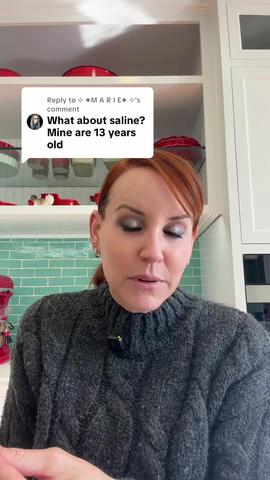
Do Saline Implants Need Imaging Like Silicone Implants?
December 8, 2025
Dr. Killeen explains why saline implants don't require routine imaging but still need regular follow-up — especially older implants placed through high-risk incisions.