Muscle Repair During Implant Removal and Revision
So when the implant keeps everything tight, it looks relatively normal, but when the implant comes out and the space has been stretched, it can look quite strange.
Muscle Repair During Implant Removal and Revision
Let's talk about muscle repair with implant removals and revisions, because this is one of the most under-discussed parts of explant and plane-change surgery, and it changes how the chest looks and moves once the implant is out.
What Happens to the Muscle When an Implant Goes Under It
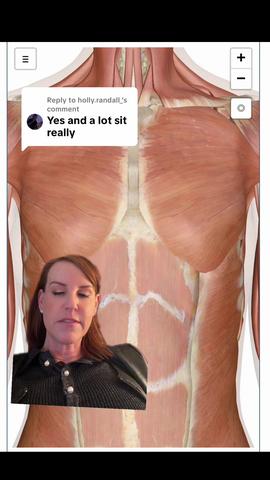
When we place a breast implant under the muscle, the muscle we're talking about is the pectoralis major.
To get an implant underneath it, we separate the muscle from your chest wall along its lower and inner attachments. That whole muscle can then be elevated, and the implant slides underneath. (For the full map of placement options, see subglandular, submuscular, dual plane, and subfascial.)
Here's the consequence: that process stretches the muscle out and leaves it in a position that isn't natural for a lot of people.
Why Animation Can Look Worse After the Implant Comes Out
This surprises patients, and it's important to understand before you explant.
That stretched-out muscle is no longer properly connected to the chest wall. So when you remove the implant, the muscle tends to do weird things.
The muscle motion you see in women with implants under the muscle can actually look worse with the implant out than it did with the implant in.
The logic is simple: the implant was keeping everything tight, so it looked relatively normal. Once the implant is gone and the space has been stretched, that unanchored muscle can look quite strange.
This is exactly why, if I'm removing an implant altogether that sits under the muscle, or moving an implant from under to over the muscle, I always make a point of repairing the muscle back where it belongs.
How the Repair Is Actually Done
There's a technical wrinkle. Because there's been an implant under the muscle, you have a capsule, and that capsule is smooth and slides. Smooth surfaces don't heal to each other. So to get the muscle to reattach, you need a raw surface.
There are two ways to create one:
- Completely remove the capsule from under the muscle and off the chest wall, or
- Rough up those surfaces so they're raw and will heal together
Then I suture everything down to the chest wall with a big, heavy-duty dissolvable stitch. I don't love permanent stitches in the breast, as I've talked about before, so dissolvable is my preference here.
The Wackadoodle Things I Find in Revision Surgery
Sometimes I go in for revision surgery and find genuinely surprising things done to the muscle.
Muscle Detached Far Too Widely
In patients who've had a lot of surgery, the muscle is sometimes released off the sternum and all the way up. What you end up with is a wad of muscle sitting in the upper outer quadrant of the breast. That's a difficult problem and a little bit harder to repair than a standard release.
A Split Muscle
Some surgeons will split the pectoralis in half during a breast augmentation, on the theory that it allows better projection of the implant.
I don't love that idea. And practically, it means that during a revision I don't just have to reattach the muscle at the bottom, I also have to repair a split through the middle of it. It really just depends on what I encounter when I get in there.
The Long-Term Contracture Wad
For patients with long-term capsular contractures, especially ones that are 10-plus years old, the muscle is often shoved all the way up high on the chest. The contracted implant pushes it upward over years, and it becomes a fibrotic wad that can be really difficult to unroll and pull back down into position.
Why I Put It Back Whenever Possible
My philosophy on this is simple:
I'm always a fan of putting things back where they belong, if at all possible.
A muscle left detached and stretched doesn't just look odd, it behaves oddly. Repairing it does add some tenderness to recovery, but the recovery is genuinely manageable.
The Bottom Line
- Placing an implant under the pectoralis major requires detaching it from the chest wall, which stretches it into an unnatural position.
- When the implant is removed, that unanchored muscle can make animation look worse than it did with the implant in, because the implant had been holding everything tight.
- When I explant or move an implant from under to over, I repair the muscle back to the chest wall whenever possible.
- The repair requires creating a raw surface, either fully removing the capsule or roughing it up, then securing the muscle with heavy dissolvable sutures.
- In revision cases I sometimes find muscle released too far, split in half, or balled up from a long-standing contracture, each of which is harder to fix.
If you're planning an explant or a plane change and your implants are under the muscle, ask your surgeon directly whether they repair the muscle. It is a question worth asking, and the answer tells you a lot.
Your Journey to Renewed Confidence

Transform Your Life
Every person deserves to feel comfortable and confident in their own body. Our procedures aren't just about physical change. They're about reclaiming your life, your comfort, and your self-assurance.
Dr. Killeen and her team support you every step of the way, from your first consultation through recovery.
Take the first step toward the life you deserve.
Schedule Your ConsultationTransform Your Life
Every person deserves to feel comfortable and confident in their own body. Our procedures aren't just about physical change. They're about reclaiming your life, your comfort, and your self-assurance.
Dr. Killeen and her team support you every step of the way, from your first consultation through recovery.
Take the first step toward the life you deserve.
Schedule Your ConsultationRelated Articles
Do Submuscular Breast Implants Drift Apart Over Time? Yes — Here's Why
October 10, 2025
Dr. Killeen breaks down why submuscular breast implants tend to drift farther apart over time — the fixed sternal muscle attachment, repeated muscle force pushing the implant down and out, and the water-hammer effect of saline implants — and why it's a real but not universal risk.
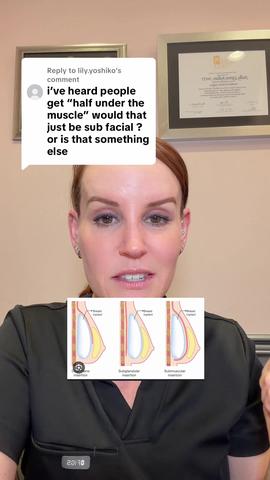
Subglandular, Submuscular, Dual Plane, Subfascial — Implant Placements Explained
October 21, 2025
Dr. Killeen breaks down the four most common breast implant placements — subglandular, submuscular, dual plane, and subfascial — what each one means anatomically, what the trade-offs are with animation deformity and biofilm, and how to think about which is right for you.

My Thoughts on Over-the-Muscle Breast Augmentation (and How They've Changed)
September 23, 2025
Dr. Killeen explains why she's transitioned the majority of her breast augmentation and reconstruction patients to over-the-muscle placement — what changed in the data, why patients prefer it, what trade-offs (rippling, edge visibility) come with it, and how Motiva implants have helped.