Can a Breast Implant Slip Out From Under the Muscle Over Time? Yes — Here's What Causes It.
Most patients don't realize their implant has slipped out from under the muscle — the appearance doesn't obviously change. We diagnose it on exam or when we open you up for revision. For long-standing problems, sometimes we can't get the muscle back where it belongs — and the cleanest fix is converting to over the muscle.
Can a Breast Implant Slip Out From Under the Muscle Over Time? Yes — and Here's What Causes It.
A great question came in about submuscular and dual-plane breast augmentation: "Can my implant actually slip out from under the muscle, even if it was placed under?"
Yes — it can. And it's actually pretty common. Let me walk through what causes this, how to recognize it, and how we fix it during revision surgery.
A Quick Refresher: What "Under the Muscle" Actually Means
Most patients who have under-the-muscle augmentation actually have a dual-plane placement. This is a specific technique where:
- The upper portion of the implant is covered by the pectoralis muscle
- The lower portion is uncovered — directly behind breast tissue
- We release the lower attachments of the pectoralis muscle to let the implant settle into a more natural position
This is the most common approach in modern submuscular augmentation because it produces a more natural lower-pole shape than a true full-submuscular placement.
Knowing this is important because dual-plane placement creates the anatomic setup for the implant to potentially drift out from under the muscle over time.
The Four Main Reasons Implants Slip Out From Under the Muscle
When patients come to me for revision and I find that the implant is no longer behaving as a submuscular implant, it's usually because of one of these four scenarios:
1. Lower Pole Stretch / Capsule Stretching
This is the most common reason.
The muscle stays where it is at the top. But the lower capsule and tissue stretch over time, allowing the implant to drift downward and out from under the muscle.
Why this happens:
- Thin capsule that doesn't hold the implant well
- Large implant putting more downward force on the tissue
- The original surgeon lowered the inframammary crease at the time of the original surgery, weakening the fold and making it more prone to drift
- Years of normal forces acting on a heavy implant
The result: the implant slides down, the lower capsule elongates, and the implant is no longer sitting where the original muscle pocket was.
2. Over-Release of the Muscle at Original Surgery
If the original surgeon released too much of the pectoralis muscle when creating the pocket — beyond what a typical dual plane requires — the muscle retracts upward.
What this looks like:
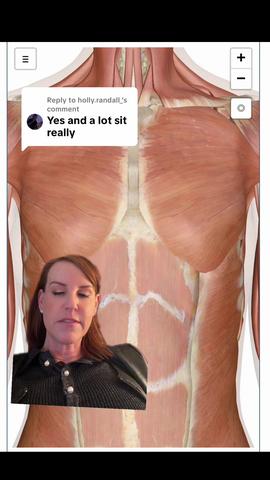
- The pectoralis becomes a band or wad of tissue sitting up high on the chest
- The implant is essentially uncovered below it
- The result functions more like an over-the-muscle placement than the under-the-muscle the patient signed up for
- Often associated with significant animation deformity because the released muscle is now under tension
We can usually identify this on physical exam — having the patient flex their pec lets us see exactly where the muscle is sitting and how much was released.
3. Capsular Contracture
Capsular contracture can also cause the muscle to retract.
In a severe contracture:
- The capsule becomes thick and contracted
- The muscle gets pulled up with the contracting capsule
- It becomes a fibrotic wad sitting above the implant
- When we open up the pocket for revision, we find the implant essentially uncovered by muscle
This is one of the long-term complications I worry about most with submuscular implants — once the muscle has been pulled into a contracted, fibrotic position, it's very difficult to ever get it back to where it should be.
4. Combination Factors
In real-world practice, many revision patients have a combination of these things going on:
- Some lower-pole stretch
- Some original over-release
- Some capsule pathology
The revision plan has to address all of them.
Most Patients Don't Know This Has Happened
This is the surprising part for patients: most don't notice that their implant has slipped out from under the muscle.
It doesn't typically change the appearance of the augmentation in a way that's obviously diagnostic. The patient may notice:
- Some shape change over time
- A slightly different feel
- Maybe some drift or asymmetry
- Sometimes increased animation deformity if the muscle is over-released
But the patient usually doesn't walk in saying "my implant has slipped out from under the muscle." They walk in saying "things look different from how they used to" — and I figure out what's actually happening when I examine her or when we open her up in the OR.
How We Fix It
The first step is diagnosis: which of the four mechanisms is responsible? Each requires a different approach.
Step 1: Decide Whether to Stay Under or Transition Over
Before fixing anything, the bigger question is whether to:
- Restore the implant to a proper under-the-muscle position, or
- Convert to over-the-muscle
This decision depends on:
- How much viable muscle is still there
- Whether the muscle position can realistically be restored
- The patient's goals and tolerance for animation deformity
- Whether going over the muscle is actually a better long-term solution
In many revisions where significant muscle pathology has developed, converting to over the muscle is the cleaner solution.
Step 2: Fix the Specific Mechanism
For Lower Pole Stretch
- Scaffolding — mesh or dermal matrix — to reinforce the lower pole
- Sometimes capsulorrhaphy (suturing the capsule to tighten it)
- Often smaller or different-profile implant to reduce the downward force
For Over-Release
- Try to bring the muscle back down — but for long-standing cases, this often isn't possible
- May require tethering the muscle to the chest wall or implant pocket using scaffolding
- Sometimes the right answer is acceptance that the muscle won't return to its original position, and we adjust the rest of the surgical plan accordingly
For Capsular Contracture
- Treat the contracture with complete capsulectomy
- Brand new implant
- Liberal scaffolding
- For long-standing contractures, we often cannot fully restore the muscle to its original position — important to set this expectation pre-op
Step 3: Use Scaffolding Liberally
Across most of these scenarios, scaffolding is a key tool:
- Reinforces the pocket
- Tethers displaced muscle
- Supports the lower pole
- Reduces recurrence of the same problem after revision
This is why I'm such a strong advocate for using dermal matrix and dissolvable mesh in revisions where structural support is needed.
Why This Is Important to Know
A few practical implications for patients:
1. Your "Under the Muscle" Implants May Not Stay There
If you have submuscular implants and you're experiencing changes in shape, position, or animation over time, it's possible the implant has drifted out from under the muscle. This may not be visible to you — but it's relevant to any future revision.
2. Your Revision Surgeon Needs to Diagnose This
When you go for a revision consultation, a good surgeon should:
- Examine the muscle with you flexing
- Discuss what they think is happening anatomically
- Explain whether they'll try to restore submuscular position or convert to over-the-muscle
- Discuss scaffolding as part of the plan
3. Long-Standing Problems Are Harder to Fix
The longer the muscle has been pulled up, over-released, or contracted, the less likely we are to be able to restore it to its original position. This is one of the reasons not to delay addressing implant problems indefinitely.
4. Conversion to Over-the-Muscle Is Often the Right Answer
For many revision patients, converting to over-the-muscle is a cleaner, more durable solution than trying to restore a damaged submuscular pocket. This is something to discuss thoughtfully — what works best long-term often isn't what was done originally.
The Bottom Line
Yes — implants placed under the muscle can drift out from under the muscle over time. The four main causes are:
- Lower pole capsule stretch (most common)
- Over-release of the muscle at the original surgery
- Capsular contracture pulling the muscle up
- A combination of the above
Most patients don't realize this has happened — the appearance doesn't obviously change. We typically diagnose it on exam or in the OR during revision.
Fixing it requires:
- Diagnosing the underlying mechanism
- Deciding whether to restore submuscular position or convert to over-the-muscle
- Often using scaffolding for structural support
- Setting realistic expectations — for long-standing problems, some changes are permanent
If you have submuscular implants and you're noticing changes, this is one of the things worth having checked at a revision consult. It's a real, common problem — and it's very fixable when caught with the right surgical plan.
Your Journey to Renewed Confidence

Transform Your Life
Every person deserves to feel comfortable and confident in their own body. Our procedures aren't just about physical change. They're about reclaiming your life, your comfort, and your self-assurance.
Dr. Killeen and her team support you every step of the way, from your first consultation through recovery.
Take the first step toward the life you deserve.
Schedule Your ConsultationTransform Your Life
Every person deserves to feel comfortable and confident in their own body. Our procedures aren't just about physical change. They're about reclaiming your life, your comfort, and your self-assurance.
Dr. Killeen and her team support you every step of the way, from your first consultation through recovery.
Take the first step toward the life you deserve.
Schedule Your ConsultationRelated Articles
Do Submuscular Breast Implants Drift Apart Over Time? Yes — Here's Why
October 10, 2025
Dr. Killeen breaks down why submuscular breast implants tend to drift farther apart over time — the fixed sternal muscle attachment, repeated muscle force pushing the implant down and out, and the water-hammer effect of saline implants — and why it's a real but not universal risk.

Do Breast Implants Sag More Under or Over the Muscle?
October 1, 2025
Dr. Killeen breaks down the real factors that drive breast implant sagging — implant size, capsule thickness, tissue quality, weight fluctuations, activity level, and muscle release — and pushes back on the absolute claims you see in Facebook groups about which placement is "always better."
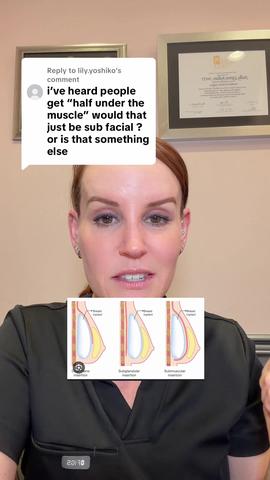
Subglandular, Submuscular, Dual Plane, Subfascial — Implant Placements Explained
October 21, 2025
Dr. Killeen breaks down the four most common breast implant placements — subglandular, submuscular, dual plane, and subfascial — what each one means anatomically, what the trade-offs are with animation deformity and biofilm, and how to think about which is right for you.