Filming a TikTok While Driving: What the Crash Data Actually Says
There is never, ever, ever a reason to film a TikTok while driving.
Filming a TikTok While Driving: What the Crash Data Actually Says
A creator who films videos from behind the wheel asked a question that, to be fair, sounds reasonable: how is filming like this any different from talking to a passenger?
I'm glad she asked, and I'm happy to answer, with one note first: she's a nurse anesthetist. As a medical professional, she has access to all of this literature too, and we should be setting a better example for our patients.
There are multiple publications in this area. Here's what they show.
Yes, Talking to a Passenger Does Raise Your Risk
Let's give the premise its due. Conversing with a passenger does in fact increase your risk of crashing. That part isn't wrong, and it's a real finding.
But it's where the comparison stops.
A Phone Is in a Different Category Entirely
Talking on a cell phone is associated with roughly a fourfold increase in crash risk — dramatically higher than the risk from talking with someone sitting next to you.
Same activity on paper, conversation, wildly different outcome. Which raises the interesting question: why?
Why Passengers Are Different: They Share Your Situational Awareness
The main reason we think this is true comes down to what the other person can see.
A passenger has the same situational awareness you do. They're sitting right there, looking at what you're looking at. Which means:
- They pause the conversation when things get hairy on the road
- They see what you see as you're driving
- You're more likely to be looking forward than looking at them
A passenger is, functionally, a second set of eyes participating in the drive. They manage the conversation around the road.
A phone does none of that. It has no idea a truck just merged. And critically, people look at it. Repeatedly.
Hands-Free Doesn't Solve It
This is the part people most want to be untrue: researchers have looked at hands-free cell phone use, and it also shows an increased crash risk.
Hands-free is not the mitigation people think it is. The distraction isn't only about what your hands are doing, it's cognitive. Your attention is the scarce resource, and a phone conversation consumes it whether or not you're holding the phone.
The Most Hazardous Part Is Your Eyes Leaving the Road
Of everything in this literature, the single most dangerous behavior is taking your eyes off the road.
Which is exactly what filming does, even when the person filming doesn't believe they're doing it. People keep looking at the screen. They check the framing, they check that they're still recording, they watch themselves talk.
My honest suggestion to anyone who films while driving: go back and watch your own video and count how many times you looked at that screen. It's more than you think.
The Professional Part of This
Here's why I bothered to respond at all.
When a licensed clinician films content while driving, that content doesn't just risk their own safety. It models the behavior for every patient and every follower watching. We spend our careers telling patients to follow evidence-based advice about their own bodies. That's a credibility we're all borrowing from each other, and it's worth protecting.
If we're going to have a platform as medical creators, the minimum standard is not actively demonstrating a behavior with a well-documented fourfold crash risk. (There's a reason other countries have started regulating who can present as a medical authority online.)
The Bottom Line
Talking to a passenger does raise crash risk somewhat. Using a phone raises it far more, roughly fourfold, and:
- Passengers are protective because they share your situational awareness and pause when the road demands it
- Hands-free does not fix the problem, because the distraction is cognitive
- The most hazardous act is taking your eyes off the road, which is precisely what filming requires
So, plainly: you are putting all of us at risk when you do this, and there is zero reason for it.
There is never, ever, ever a reason to film a TikTok while driving.
Pull over. The video will still be there.
Your Journey to Renewed Confidence
Transform Your Life
Every person deserves to feel comfortable and confident in their own body. Our procedures aren't just about physical change. They're about reclaiming your life, your comfort, and your self-assurance.
Dr. Killeen and her team support you every step of the way, from your first consultation through recovery.
Take the first step toward the life you deserve.
Schedule Your ConsultationTransform Your Life
Every person deserves to feel comfortable and confident in their own body. Our procedures aren't just about physical change. They're about reclaiming your life, your comfort, and your self-assurance.
Dr. Killeen and her team support you every step of the way, from your first consultation through recovery.
Take the first step toward the life you deserve.
Schedule Your ConsultationRelated Articles
When a Patient Targets Their Physician Online: A Hard Conversation Without an Easy Answer
August 8, 2025
Dr. Killeen reflects on a viral situation where a patient is publicly accusing her treating physician on social media — and the broader phenomenon of unwell patients targeting physicians online with essentially no recourse, while also recognizing that the patient doing the harm is often someone in genuine crisis.
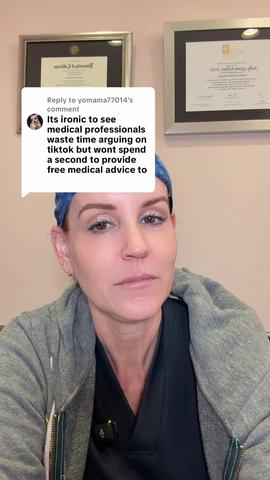
Why Doctors Don't Give Free Medical Advice on Social Media
October 20, 2025
Dr. Killeen responds to a common comment — "it's ironic that doctors argue on TikTok but won't give you free medical advice" — and explains why no responsible physician can safely give individualized medical advice through DMs, why it's a real legal liability, and what helpful use of medical content actually looks like.
Implant Reconstruction Myths: Mold, Mammograms, and Fear Tactics
September 10, 2026
A creator who works at a breast center said she would never have implant reconstruction. Dr. Killeen separates the true part (no surgery is complication-free and every reconstruction ages) from the false: you do not get mammograms of a reconstructed breast after a mastectomy, mold around implants is rare, was local rather than systemic, and was a saline implant finding while reconstruction uses silicone, and mammography techs do not resent imaging women with implants. Plus what complication inflation is and why it works.