Mesh in a First-Time Breast Augmentation: Who Should Consider It
Pretty much no one needs to have mesh, but it's certainly nice to add in certain patients.
Mesh in a First-Time Breast Augmentation: Who Should Consider It
This is a fantastic question, and it's a specific one: when should you consider mesh in a primary breast augmentation? "Primary" means someone who has never had breast surgery before and is getting implants for the first time. This isn't a revision or a reconstruction, where scaffolding is often used to fix a problem that already exists.
So let me start with the honest answer, and then walk through the patients where I actually reach for it.
Pretty much no one needs to have mesh, but it's certainly nice to add in certain patients.
When I say "mesh" here, I mean a dissolvable surgical scaffold placed to add support inside the implant pocket. This is the same idea as an internal bra, not the permanent vaginal mesh from the lawsuit commercials.
1. Patients Whose Crease We're Moving
The first group I consider is anyone where we're moving the inframammary crease, the fold underneath the breast. If your crease isn't in quite the right place and we need to set it somewhere new, there's a problem: a created crease is never as strong as a natural crease.
So I like a little extra reinforcement and a little extra strength in that area. Two examples where this comes up a lot:
- Tuberous breast deformity
- Trans women having breast augmentation
2. Massive Weight Loss Patients
The next group is my massive weight loss patients. Their crease tends to be looser and not as tight, and I see more malposition problems in this population, meaning the implant doesn't stay where we put it. So I love adding support here.
3. Very Large, Disproportionate Implants
The next group is patients who want very, very large implants that are disproportionate to their frame.
With big implants come big problems.
Those problems include a higher risk of capsular contracture and a higher risk of malposition. If you're going disproportionately large, mesh is worth considering. (I've written more about how implant size, tissue quality, and lifestyle drive sagging regardless of placement.)
4. High-Impact Athletes
This one is more of a patient choice, and it comes down to your activity level. If you do a lot of high-impact exercise, say you're a long-distance runner, you tend to see more inferior malposition, where the implant drops too low. That's especially true with saline implants. So this is another group where mesh is a reasonable thing to consider.
5. Motiva Implants, Especially in Larger Sizes
Finally, the newer implants on the market. Motiva implants are known to make a thinner capsule. The concern is that, especially with larger implants, that thinner capsule may stretch with time.
A little reinforcement at the bottom of the implant cavity can help prevent that.
Yes, This Is Off-Label
Using a surgical scaffold this way is off-label. There are no surgical scaffolds that have been tested for on-label indications in the breast, but we do commonly use them. That's worth a real conversation with your surgeon before you decide.
My go-to is GalaFLEX. That's typically what I use, but different surgeons will use different products. If you want my full opinions, product by product, I've ranked the breast scaffolds I love and the ones I don't.
Think of It as an Insurance Policy, Not a Requirement
I love using mesh in these situations. I find it's nice to have that little bit of insurance policy. But I want to be really clear:
You certainly don't need to. There are many, many patients who have all of the things I just listed who have augmentations with no issues at all.
It's a nice to have, not a must.
The Bottom Line
Most patients having a first-time breast augmentation don't need mesh. But it can add useful support in a few groups:
- Patients whose crease is being moved (tuberous breasts, trans augmentations)
- Massive weight loss patients with loose creases
- Patients choosing very large, disproportionate implants
- High-impact athletes, especially with saline implants
- Motiva patients, particularly in larger sizes, because of the thinner capsule
It's off-label, surgeons have different preferences (mine is GalaFLEX), and plenty of patients in every one of these groups do perfectly well without it. Ask your surgeon whether you fall into one of these categories, and whether the extra support is worth it for you.
Your Journey to Renewed Confidence

Transform Your Life
Every person deserves to feel comfortable and confident in their own body. Our procedures aren't just about physical change. They're about reclaiming your life, your comfort, and your self-assurance.
Dr. Killeen and her team support you every step of the way, from your first consultation through recovery.
Take the first step toward the life you deserve.
Schedule Your ConsultationTransform Your Life
Every person deserves to feel comfortable and confident in their own body. Our procedures aren't just about physical change. They're about reclaiming your life, your comfort, and your self-assurance.
Dr. Killeen and her team support you every step of the way, from your first consultation through recovery.
Take the first step toward the life you deserve.
Schedule Your ConsultationRelated Articles
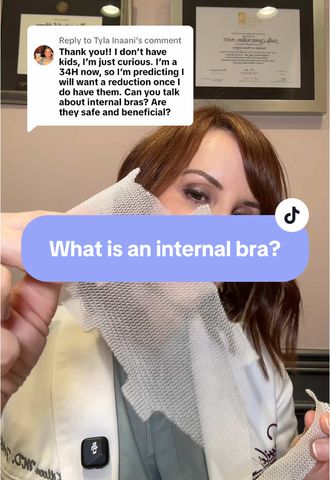
What Is an Internal Bra? (And Why I Use Surgical Scaffolding)
May 8, 2025
Dr. Killeen explains what an internal bra is — added internal support built into a breast lift, reduction, or augmentation to hold things up like a bra. She covers the many ways to make one (stitches, fascia, skin, tucking under the muscle) and her favorite, surgical scaffolding with dissolving products like TIGR Matrix and GalaFLEX that leave supportive collagen behind. She also explains why these products are used off-label in the breast and why that deserves a conversation.
How Skin Quality Affects Your Breast Augmentation Results
November 18, 2025
Dr. Killeen explains how skin quality affects breast augmentation — from stretch mark risk with tight young skin to the need for mesh support with poor skin quality, and why wearing a supportive bra protects your investment long-term.
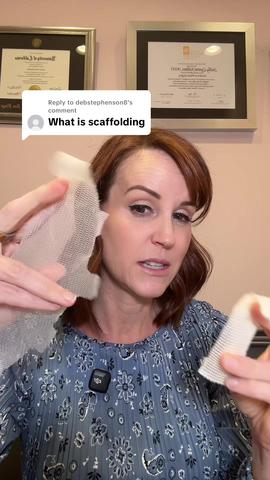
What Is "Scaffolding" in Breast Surgery? Dermal Matrix, Mesh, and What They Actually Do
August 21, 2025
Dr. Killeen explains what surgeons mean by "scaffolding" in breast surgery — including dermal matrix products like AlloDerm and Strattice, dissolvable meshes like TIGR and Galaflex, and why this is fundamentally different from the vaginal mesh products you've seen in scary commercials.