The Red Flag: A Surgeon Too Rigid to Change Their Mind
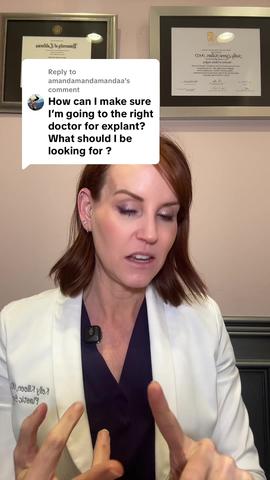
They all thought they had some secret magic way to help these patients, but none of them really studied it. Retrospective series, no control group, never comparing their en bloc capsulectomies to patients who could not have that procedure. But when people did study it properly, they fought it, and they fought it hard.
The Red Flag: A Surgeon Too Rigid to Change Their Mind
One of the biggest red flags when you're talking to a surgeon is someone who is too rigid with their recommendations.
Not confident. Not opinionated. Rigid, as in unwilling to move when the evidence moves. And I want to walk through the clearest example I know of, because it shows exactly how this failure works, and why it should worry you as a patient.
Medicine Is Supposed to Change
Start with the baseline expectation:
In medicine, things are always changing. We are constantly getting new information, and we should always be adjusting our recommendations based on it.
That's not a weakness of the field, it's the entire point of it. A surgeon whose recommendations in 2026 are identical to their recommendations in 2010 hasn't achieved consistency. They've stopped reading.
The Example: Surgeons in the Explant Community
A great illustration is a subset of surgeons in the explant community.
They performed the surgery one particular way, held on very, very tightly to the belief that this was the only way, and then didn't have an open mind when new studies showed they were wrong.
What makes this group genuinely interesting is the evidentiary double standard, and it has two halves.
Half One: They Never Properly Studied Their Own Claim
They all believed they had some secret magic way to help these patients. But none of them really studied it.
What they produced instead:
- Retrospective case series of their own patients
- No control group
- They never compared their en bloc capsulectomies to patients who couldn't have that procedure
That last omission is the fatal one. Without comparing against patients who didn't get the aggressive operation, you cannot know whether the operation is what helped. You've documented that patients got better, not that your technique is why. (I've gone through what the actual evidence shows about total capsule removal and why "en bloc" is almost never the right call.)
They simply didn't study it the way it should have been studied.
Half Two: Then They Fought the Studies That Were Done Properly
Here's the part that reveals what's actually going on. When researchers did study it properly, they fought it. Hard.
It was genuinely something to watch: surgeons attacking well-done studies while their own contribution to the literature was a collection of poorly done retrospective reviews. The standard of evidence they demanded of others was one they had never come close to meeting themselves.
That's not scientific caution. That's motivated reasoning, and it's the same pattern behind misusing a weak paper to push a conclusion.
Why They Don't Pivot: They're Protecting What They Do
In my opinion, when surgeons behave like this, it's because they're protecting what they do.
The mechanism is straightforward. Someone builds a practice around doing a lot of one thing. New information arrives suggesting that thing is less necessary, or not better for patients. Their options are:
- Pivot to what the evidence now supports, which may mean doing less of their signature procedure, or
- Find a reason the new information is wrong, so they can keep doing what they do
Too many choose the second. And when a large share of your revenue depends on one operation, that pull is powerful, which is exactly why it's worth following the money when you evaluate strong claims.
There's a related tell worth naming: beware the surgeon who misstates the importance or findings of a study to push an agenda. Overselling weak evidence and dismissing strong evidence are the same behavior pointed in two directions.
This Isn't Unique to Explant Surgeons
I want to be fair, because this is true of doctors in any area who primarily do one thing.
If you do one procedure almost exclusively, you are genuinely an expert in that one thing. That's real, and it's valuable. But the danger runs alongside it:
- You're not open to change when new information becomes available
- And you're not open to a conversation with patients who don't want that one thing
That second point matters enormously at a consultation. If the only operation on the menu is the one they always do, the recommendation you receive isn't really about you.
What to Watch For as a Patient
When you're consulting, listen for whether your surgeon can:
- Describe how their practice has changed over the years, and why
- Explain trade-offs rather than declaring one option universally correct
- Engage seriously when you ask about an approach they don't favor
- Distinguish what the evidence shows from what they prefer
- Say the words "I used to do it this way, and I changed"
A surgeon who can do those things is reading the literature and applying it to you. One who can't is applying their habits to you. (More red flags in warning signs of a surgeon who doesn't evolve.)
The Bottom Line
- Rigidity is one of the biggest red flags in a surgical consultation. Medicine changes; recommendations should too.
- The explant community is the clearest case study: they insisted on one approach and didn't update when studies contradicted them.
- Their own evidence was retrospective, uncontrolled, and never compared against patients who couldn't have the procedure, yet they fought rigorous studies aggressively.
- The likely motive is protecting what they do when new evidence threatens it.
- This applies to any doctor who does primarily one thing, expert in it, but often closed to change and to patients who want something else.
If a surgeon can't tell you what they've changed their mind about, that's worth noticing. And if you don't trust the answers you're getting, find a different surgeon. There are plenty of us.
Your Journey to Renewed Confidence

Transform Your Life
Every person deserves to feel comfortable and confident in their own body. Our procedures aren't just about physical change. They're about reclaiming your life, your comfort, and your self-assurance.
Dr. Killeen and her team support you every step of the way, from your first consultation through recovery.
Take the first step toward the life you deserve.
Schedule Your ConsultationTransform Your Life
Every person deserves to feel comfortable and confident in their own body. Our procedures aren't just about physical change. They're about reclaiming your life, your comfort, and your self-assurance.
Dr. Killeen and her team support you every step of the way, from your first consultation through recovery.
Take the first step toward the life you deserve.
Schedule Your ConsultationRelated Articles

To BII Survivors Defending Aggressive Explant Surgery: An Open Letter
August 15, 2025
Dr. Killeen writes directly to the BII community of women who had aggressive explant surgery and improved — asking them to reconsider defending that approach for future patients. With the research showing simpler explant achieves equivalent symptom relief without the higher costs, complications, or cosmetic deformity.
How to Pick an Explant Surgeon: What I'd Look for as a Patient
June 10, 2025
Dr. Killeen's checklist for choosing a surgeon for implant removal: board certification, hospital privileges, national society membership, individualized evidence-based care, and before-and-after photos that show different operations for different patients.

A Third Patient Contracted HIV at a New Mexico Med Spa: How "Cheap" Procedures Cost Three People Their Health
July 10, 2025
Dr. Killeen breaks down the update to the New Mexico VIP med spa case where a third patient has now been identified as contracting HIV from a "vampire facial" PRP microneedling procedure. Plus what the $100 pricing told us about the corners being cut, and how to verify safety before any aesthetic procedure.