How to Choose a Plastic Surgeon: Start Objective, Then Subjective
Imagine it's 2 a.m. and you need help. Are you going to feel comfortable calling them? You want someone that is on your team.
How Do You Choose a Plastic Surgeon?
A commenter asked me this, and it's one of the most important questions you can ask before any procedure. Here's what I think you should consider when choosing your plastic surgeon.
I break it into two parts: first, the objective things you can verify, and then the subjective things only you can judge.
Part 1: The Objective Checks
1. Proper Training and Board Certification
Always start here. You should be seeing a properly trained, board-certified plastic surgeon. That means your surgeon:
- Completed a plastic surgery training program, and
- Is board certified by the American Board of Plastic Surgery.
You can verify the board certification yourself:
- Go to the American Board of Plastic Surgery website and click the "Is Your Surgeon Certified?" button, or
- Go to certificationmatters.org, enter your surgeon's name, and it will tell you what their board certification is in.
(Here's more on how to check whether your doctor is board certified.)
A board certification in general surgery, cosmetic surgery, or anything else is not the same. For plastic surgery, only a board-certified plastic surgeon.
That's the difference between a plastic surgeon and a "cosmetic surgeon", and it's huge.
2. An Active License in Your State
Next, make sure your surgeon is licensed in your state, because believe it or not, that apparently is a problem. Go to the medical board of your state, put in your surgeon's name, and confirm they have an active medical license there. (Skipping this check can be fatal: a patient died after surgery by an unlicensed man in a Queens house.)
3. Hospital Privileges
This one is very important: find out where your surgeon is on staff at a hospital.
You never want something bad to happen. But if it does, you want to make sure your surgeon is able to care for you in a hospital and doesn't abandon you to find help on your own.
So even if your surgery is done at an accredited outpatient surgery center, ask where your surgeon has admitting privileges, and whether they're able to do these same operations in the hospital. Basically:
If something happens, are you going to care for me, and where do we go?
(More on why hospital privileges matter, and why your surgeon should never abandon you after a complication.)
Part 2: The Subjective Checks
The next few things aren't objective. They're subjective, but they matter.
4. Before-and-Afters, With Variety
Look at before-and-afters for the surgery you want. And here's what you should see: a variety of different results. You want a surgeon who listens to what you say as an individual and doesn't give every single patient the exact same result. (Some tips for evaluating before-and-afters.)
5. How Well You Communicate
How well do you communicate and get along with this person? You want a surgeon you can have open communication with, someone you'll be comfortable discussing things with.
If you're intimidated by them, or they make you feel a little uncomfortable, ask yourself this:
Imagine it's 2 a.m. and you need help. Are you going to feel comfortable calling them?
You want someone who's on your team: a partner through not only the great result they're going to give you, but also any problems that could arise. (If you don't feel that way, it's okay to find a new surgeon.)
6. Recommendations From Friends and Family
Ask around. You'd be surprised how many people you know have had cosmetic procedures. Many are willing to talk about it, but they're uncomfortable bringing it up. So if you suspect a friend has had something done, ask. A recommendation from someone you trust is really powerful information.
7. Talking to Prior Patients
Finally, you can ask your plastic surgeon at your consultation whether they'd be willing to connect you with some of their prior patients, to chat about the procedure, what it was like having surgery with them, and what it was like dealing with their office. That's often helpful, too. (More tips for a great consultation.)
The Checklist
Start with the objective:
- Training in plastic surgery
- Board certification by the American Board of Plastic Surgery
- An active medical license in your state
- Hospital privileges
Then move into the subjective:
- Do I like this person, and am I comfortable with them?
- Do their results look great, and are they varied?
- Do I know anyone who's had surgery with them, or can I talk to a patient for a personal perspective from outside the practice?
(Choosing a surgeon to remove your implants? Here's my explant-specific checklist.)
The Bottom Line
Choosing a plastic surgeon starts with the things you can verify yourself: plastic surgery training, American Board of Plastic Surgery certification, an active license in your state, and hospital privileges. Once a surgeon passes those, the rest is personal. Pick someone whose results show they listen to each patient, who you'd feel comfortable calling at 2 a.m., and who comes recommended by people you trust.
Your Journey to Renewed Confidence

Transform Your Life
Every person deserves to feel comfortable and confident in their own body. Our procedures aren't just about physical change. They're about reclaiming your life, your comfort, and your self-assurance.
Dr. Killeen and her team support you every step of the way, from your first consultation through recovery.
Take the first step toward the life you deserve.
Schedule Your ConsultationTransform Your Life
Every person deserves to feel comfortable and confident in their own body. Our procedures aren't just about physical change. They're about reclaiming your life, your comfort, and your self-assurance.
Dr. Killeen and her team support you every step of the way, from your first consultation through recovery.
Take the first step toward the life you deserve.
Schedule Your ConsultationRelated Articles
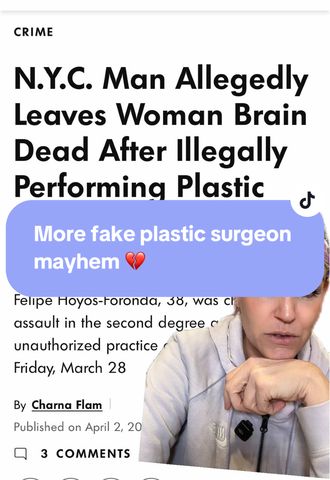
A Patient Died After Surgery in a Queens House: How to Actually Vet a Surgeon
April 7, 2025
An unlicensed man performed surgery on a woman inside his Queens house, called 911 when she became unresponsive, then fled and was apprehended at JFK trying to leave the country. She could not be saved. Dr. Killeen uses the case to walk through the checks that would have prevented it: verifying state licensure and American Board of Plastic Surgery certification, confirming hospital privileges so a surgeon can follow you on transfer, checking facility accreditation, and asking where your surgery will actually be performed.
Hospital Privileges: Why They Matter When Choosing a Surgeon
March 16, 2026
Dr. Killeen explains what hospital privileges are, how they work, and why it's critical that your surgeon can follow you to the hospital if complications arise.
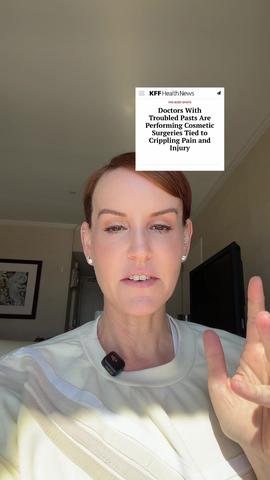
Plastic Surgery "Chop Shops": Why They're Dangerous and How to Protect Yourself
October 13, 2025
Dr. Killeen breaks down a recent investigative article on plastic surgery chop shops like Goals Plastic Surgery and Sono Bello — including their hiring of disciplined surgeons, fake "3-month plastic surgery fellowships," consultant-led surgical decisions, and lack of after-hours care.